
The Meaning of the Empty Coffins
Ofrenda a la tormentaThe repeated discovery of substitute fillings transforms a local funeral anomaly into a signature of the cult’s efforts to conceal its victims.
increasing Bearing strength in each event
 decreasing
Bearing strength in each eventdecreasingGravel in a Family Grave
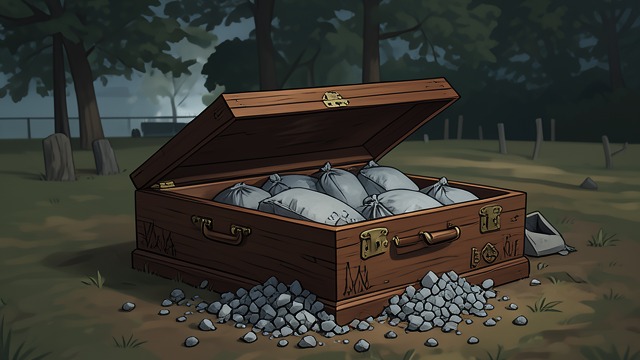
Gravel in a Family Grave
An earlier absence
Amaia previously opened her sister’s coffin and found bags of gravel instead of a body. The discovery remained unexplained and returned to her mind when the Esparza coffin was found similarly altered.
A pattern emerges
An empty coffin is not proof of ritual by itself. Repeated substitutes, however, suggest a shared method for making families believe a child has been buried.
Sugar Under the Towel

Sugar Under the Towel
A deceptive weight
Valentín Esparza places sugar packets beneath a white towel so that his daughter’s coffin appears to hold a body. The concealed substitution is discovered after he tries to take the infant away.
The significance of repetition
The device resembles the gravel found in Amaia’s sister’s coffin. Amaia begins to ask whether the same people have been using the same concealment across many years.
The Sugar Bag in Ainhoa
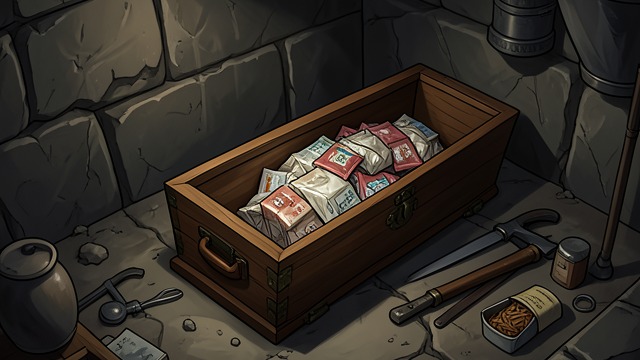
The Sugar Bag in Ainhoa
A photograph interpreted
Jonan’s close-up images reveal that the small third coffin in the Ainhoa tomb contains a recognizable food package. The discovery identifies it as sugar rather than cremated remains.
The missing first daughter
The coffin belonged to Haizea, whose death preceded the twins. Yolanda’s account of a missing child now has photographic support, even though the grave’s destruction has complicated formal proof.
A Pattern Across Families
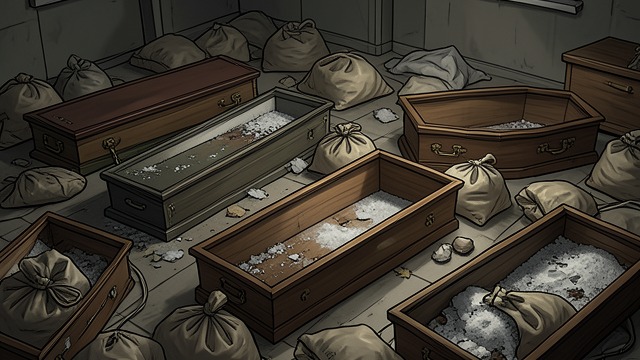
A Pattern Across Families
Substitutes and missing bodies
The team compares empty graves, sugar packets, false ashes, and unexplained coffin weights. Each case has its own gaps, but the recurring substitutions point toward coordinated concealment.
The limits of proof
Some children were autopsied, while others have no reliable records. Amaia must treat the pattern seriously without pretending every individual death is already proven to be murder.
The Empty Master Coffin
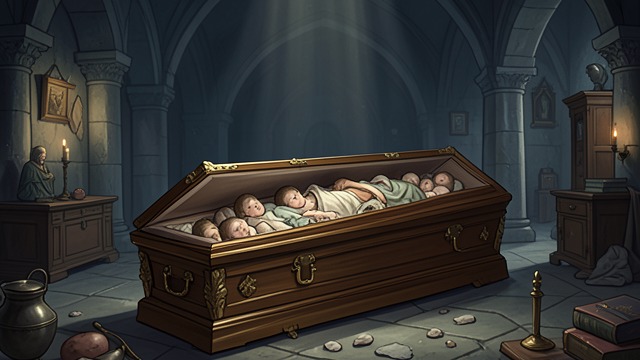
The Empty Master Coffin
A final concealment
The ornate coffin in the Tabese crypt is itself empty, surrounded instead by the remains of children. Even the cult’s central tomb contains a false destination.
An image of erasure
The empty coffin completes a recurring pattern in which victims are denied a proper burial and a stable identity. The evidence exposes not only murder but the deliberate removal of memory.
during the earlier investigation
at the Esparza funeral home
after Jonan’s archive is accessed
during the final team briefing
after the storm confrontation
